
If you’ve ever stood in front of a complex industrial system and wondered what really keeps everything moving in sync, the answer often comes down to something small but powerful, actuators.
These devices are the driving force behind valve operations, quietly controlling flow, pressure, and safety in some of the most demanding environments. Whether it’s an offshore platform, a manufacturing plant, or a processing facility, the right actuator choice can mean the difference between seamless efficiency and costly downtime.
When it comes to a pneumatic hydraulic electric actuator comparison, the decision isn’t always straightforward. Each type has its own strengths, limitations, and ideal use cases. What works perfectly in a high-pressure oil system might not be the best fit for a precision-controlled manufacturing process.
That’s why understanding how these actuators differ and where they excel, is critical for anyone involved in system design, maintenance, or operations.
Let’s break it down in a way that actually makes sense and helps you make confident decisions.
Understanding The Basics of Actuators and Why the Right Valve Actuator Selection Matters
At its core, an actuator converts energy into motion. In valve systems, that motion opens, closes, or modulates flow. Simple in theory, but in practice, the stakes are high. Choosing the wrong actuator can lead to inefficiency, safety risks, or even system failure.
That’s where smart valve actuator selection comes into play. You’re not just picking a device, you’re aligning performance, environment, and operational demands.
There are three main types you’ll encounter:
- Pneumatic actuators (powered by compressed air)
- Hydraulic actuators (powered by fluid pressure)
- Electric actuators (powered by electricity)
Each one brings a different approach to motion control, and understanding these differences is key to getting it right the first time.
Pneumatic Actuators Explained: Speed, Simplicity, And Electric Vs Pneumatic Actuator Performance Insights
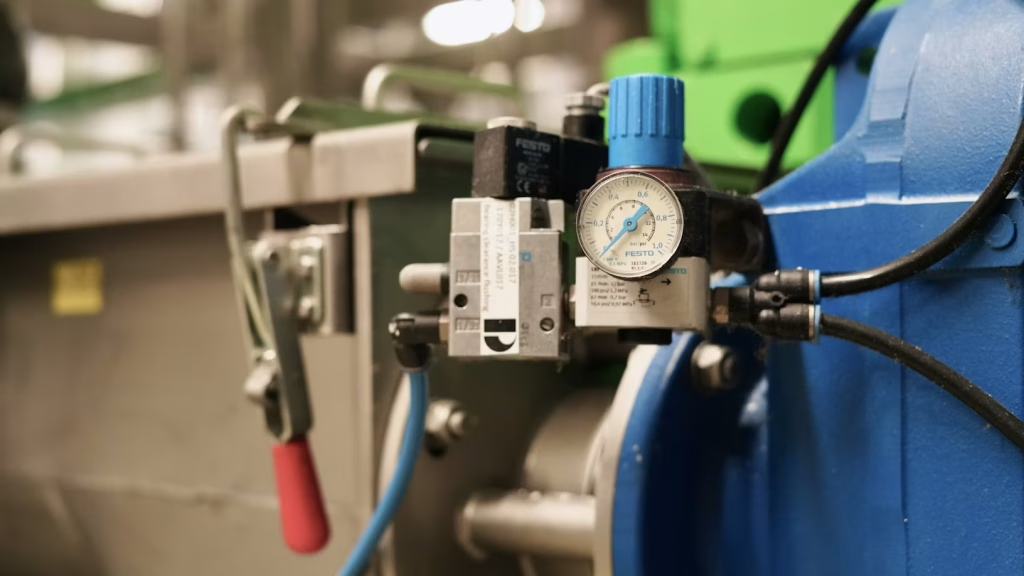
Pneumatic actuators are often the go-to choice in industries where speed and reliability matter most. They use compressed air to generate motion, making them inherently clean and relatively simple in design.
Here’s the thing, pneumatic systems shine when fast response times are critical. They can open and close valves almost instantly, which is why they’re widely used in process industries.
Why people choose pneumatic actuators:
- Fast operation with minimal lag
- Lightweight and compact design
- Safe in hazardous environments (no sparks)
- Lower upfront cost compared to other types
One important feature you’ll often see is a spring return actuator, which ensures the valve moves to a predetermined fail-safe position if air pressure is lost. That’s a huge advantage in safety-critical systems.
But let’s be honest, nothing is perfect.
Where they fall short:
- Limited torque output compared to hydraulics
- Dependence on compressed air systems
- Less precise control without additional components like a positioner
- Air leaks can reduce efficiency over time
Still, for many applications, pneumatic actuators strike the perfect balance between cost, speed, and reliability.
Hydraulic Actuators Deep Dive: Power, Precision, And Hydraulic Actuator Advantages in Heavy-Duty Systems
If pneumatic actuators are about speed, hydraulic actuators are about raw power. These systems use pressurized fluid, usually oil—to generate force, making them ideal for heavy-duty applications.
This is where hydraulic actuator advantages really stand out. When you need serious force to move large or high-pressure valves, hydraulics deliver without hesitation.
Key strengths:
- Extremely high force and torque output
- Smooth and precise motion control
- Reliable performance under heavy loads
- Ideal for large-scale industrial and offshore systems
Hydraulic actuators are commonly used in environments where strength is non-negotiable, think subsea operations or large pipeline systems.
But there’s a trade-off:
- Higher maintenance requirements
- Risk of fluid leaks (which can be messy and hazardous)
- More complex system setup
- Higher cost compared to pneumatic systems
Another factor to consider is power consumption. Hydraulic systems often require continuous energy input to maintain pressure, which can add up over time.
Still, when the job demands muscle, hydraulics are hard to beat.
Electric Actuators Uncovered: Precision Control, Efficiency, And Actuator Types Comparison for Modern Automation
Electric actuators are rapidly gaining popularity, and for good reason. They offer precision, control, and integration capabilities that align perfectly with modern automation needs.
Unlike pneumatic or hydraulic systems, electric actuators don’t rely on external fluid or air systems. They operate using motors and gear mechanisms, which makes them highly efficient and easier to integrate.
Why electric actuators are becoming the preferred choice:
- High precision and repeatability
- Easy integration with digital control systems
- Lower maintenance requirements
- Energy-efficient operation
One major advantage is their adaptability to duty cycle requirements. Whether you need continuous modulation or occasional movement, electric actuators can be configured accordingly.
They also pair seamlessly with advanced systems like valve IoT integration, allowing real-time monitoring and predictive maintenance.
Limitations to consider:
- Slower response time compared to pneumatics
- Not always ideal for extremely high-force applications
- Higher upfront cost
In environments where accuracy and automation matter more than brute force, electric actuators are often the smartest choice.
Side-By-Side Actuator Types Comparison: Breaking Down Performance, Cost, And Valve Actuator Selection Factors
Now let’s bring it all together with a practical actuator types comparison.
Performance
- Pneumatic: Fast and responsive
- Hydraulic: Powerful and consistent
- Electric: Precise and controlled
Cost
- Pneumatic: Lower initial cost
- Hydraulic: Higher setup and maintenance cost
- Electric: Higher upfront but lower long-term cost
Maintenance
- Pneumatic: Moderate (watch for leaks)
- Hydraulic: High (fluid management required)
- Electric: Low (fewer moving parts)
Control
- Pneumatic: Basic without add-ons
- Hydraulic: Smooth but complex
- Electric: Highly programmable and accurate
Application Fit
- Pneumatic: General industrial use
- Hydraulic: Heavy-duty and high-pressure systems
- Electric: Automation and smart systems
This is where actuator sizing becomes critical. Choosing the right actuator isn’t just about type, it’s about matching capacity with system requirements.
Real-World Applications and When Each Actuator Type Truly Shines in Valve Automation Systems
Let’s step out of theory for a moment.
In real-world operations, actuator choice often comes down to environment and expectations.
- In refineries and chemical plants, pneumatic actuators dominate due to their safety and speed
- In offshore drilling and heavy machinery, hydraulic actuators handle extreme loads
- In manufacturing and smart facilities, electric actuators lead the way with precision and connectivity
Modern valve automation systems increasingly favor electric actuators because they align with digital transformation goals. However, traditional systems still rely heavily on pneumatic and hydraulic solutions.
There’s no one-size-fits-all answer—and that’s exactly why understanding these differences matters.
Common Challenges and Practical Tips for Smarter Valve Actuator Troubleshooting and Long-Term Reliability
Even the best actuator can run into issues.
That’s where effective valve actuator troubleshooting becomes essential.
Common problems:
- Air leaks in pneumatic systems
- Fluid contamination in hydraulic systems
- Electrical faults in electric actuators
Practical tips:
- Regularly inspect seals and connections
- Monitor system performance data
- Use proper filtration systems
- Ensure correct installation and calibration
Also, don’t overlook components like a solenoid valve, which plays a key role in controlling actuator operation.
Taking a proactive approach can significantly extend the life of your system and prevent unexpected downtime.
Making The Right Actuator Choice for Long-Term Performance and Operational Confidence
Choosing the right actuator isn’t just a technical decision, it’s a strategic one. The type of actuator you select directly impacts performance, safety, and long-term efficiency. Whether you lean toward the speed of pneumatics, the strength of hydraulics, or the precision of electric systems, the goal is always the same: reliable and controlled valve operation.
A thoughtful pneumatic hydraulic electric actuator comparison helps you see beyond the specs and understand what truly fits your application. It’s about matching capabilities with real-world demands, not just ticking boxes on a datasheet.
If you’re looking to upgrade or optimize your system, now is the time to act. Shop Actuator & Valve Products and explore solutions designed to meet the challenges of modern industry.
And if you’re ready to take the next step, Find the right actuator-driven valve solution for your facility. Browse our Industrial Products for actuated valve assemblies, regulators, and automation-ready components.
The right choice today can save you time, cost, and complexity tomorrow—so make it count!