
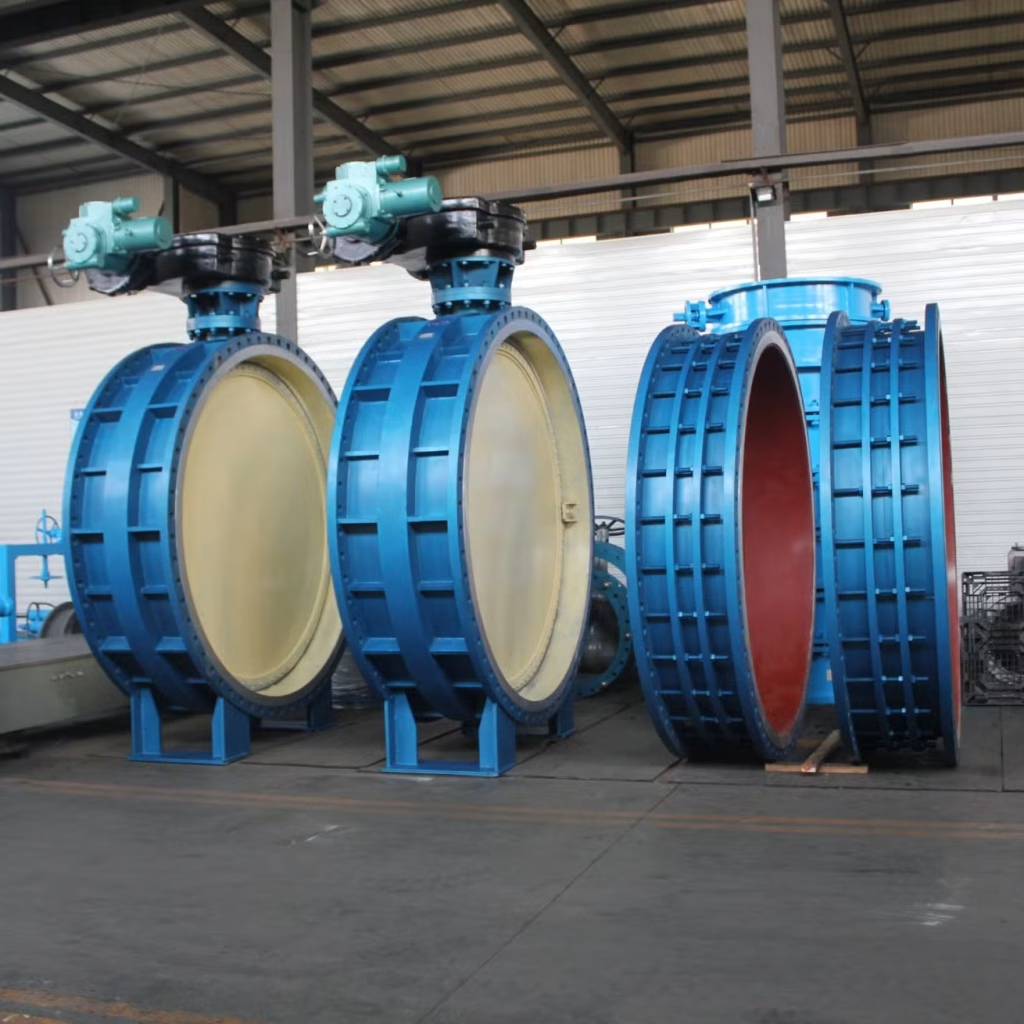
There is a moment in every plant manager’s career when they stand before a massive pipeline and realize just how much trust they place in a single rotating disc. It spins, the flow stops, and the entire operation breathes a sigh of relief. That humble disc, housed inside what looks like a simple body, carries the weight of production targets, safety protocols, and environmental compliance on its shoulders.
We are talking about the butterfly valve, a device so common we sometimes forget its genius. But not all butterfly valves are created equal, and in the demanding world of industrial processing, standard options simply won’t cut it. That is where high-performance butterfly valves enter the conversation.
These are not your grandfather’s throttling devices. They are precision instruments engineered to handle higher pressures, tighter shutoff, and more aggressive media than ever before. With over four decades of flow control experience right here in Houston, we have watched these valves evolve from simple flow regulators to critical safety components.
Today, we are pulling back the curtain on how to select the right one, and more importantly, how to keep it alive when the process tries to kill it.
Beyond The Basic Disc: Why High-Performance Butterfly Valves Redefine Reliability
Walk through any refinery or chemical plant and you will see butterfly valves everywhere. They are the workhorses of the industry. But when the pressure climbs past 200 psi or the temperature pushes beyond 400 degrees Fahrenheit, standard resilient seated valves start to sweat.
They begin to leak, they start to bind, and suddenly your maintenance team is spending weekends pulling wrenches instead of being home with their families. This is the exact moment when high-performance butterfly valves prove their worth. These valves are specifically designed for the tough stuff.
They handle the demanding quarter-turn valve applications that standard valves simply cannot survive, from high-pressure steam services to corrosive chemical transfer. What makes them so different? It starts with the seat design and the disc geometry. Unlike a traditional concentric valve where the disc is centered in the pipe, high-performance butterfly valves typically feature an offset design. This means the disc moves away from the seat almost immediately upon opening, reducing friction and wear. The result is a valve that cycles smoothly for tens of thousands of operations without compromising its seal. When you are dealing with expensive media or hazardous materials, that longevity is not just a convenience, it is a financial and safety imperative.
Understanding Industrial Butterfly Valves Through the Double Offset Versus Triple Offset Lens
If you have ever sat through a lunch meeting listening to engineers argue about valve design, you know that the offset configuration is a topic that sparks passionate debate. And for good reason. The geometry of the disc relative to the seat determines everything from torque requirements to long term seal ability.
When we talk about industrial butterfly valves, we generally categorize them by how many offsets they have, and understanding this distinction can save you thousands of dollars in replacement costs down the road. The double-offset butterfly valve moves the disc behind the centerline of the seat and also offsets the shaft from the pipe center.
This dual offset design lifts the disc completely out of the seat during opening, eliminating the rubbing and scrubbing action that destroys traditional elastomeric seats. It is the ideal choice for most general industrial applications where you need reliable shutoff without breaking the bank.
But if you are dealing with truly extreme conditions, such as high temperature steam or erosive media, you need to look at the triple-offset valve. This design adds a third offset, a conical seating angle, which creates a metal to metal seal that actually gets tighter as pressure increases.
Decoding The Anatomy: Disc Alignment, RPTFE Lining, And Torque Requirements
Let us get down to the nuts and bolts, literally. When you are selecting a high-performance butterfly valve, you are essentially making a series of interconnected decisions that will impact your operation for years. One of the first things our technicians check during a site visit is the disc alignment.
If the disc is even slightly off center relative to the seat, you are inviting premature wear and inevitable leakage. We have walked into plants where valves failed within months simply because the original installation twisted the piping, throwing the entire assembly out of whack.
Proper disc alignment starts with proper installation, but it also depends on the quality of the valve itself. A well machined valve with tight tolerances will hold its alignment for decades. Then there is the question of materials, specifically the seat. You will often see specifications calling for an RPTFE lining, and for good reason.
Reinforced Polytetrafluoroethylene, or RPTFE lining, combines the chemical resistance of traditional PTFE with added structural integrity from fillers like glass or carbon. This means the seat can handle higher pressures and temperatures without cold flowing or deforming over time.
Choosing Your Connection: Wafer Style Versus Lug Style for Industrial Applications
Here is a question that stumps more engineers than it should. You have selected the perfect valve, you have sized the actuator, and then someone asks, wafer or lug? Both are common body styles for industrial butterfly valves, but they serve very different purposes.
The wafer style valve is designed to be sandwiched between two pipe flanges, with long bolts passing completely through the valve body and connecting to both flanges. This design is compact, lightweight, and generally more economical. It works perfectly in most continuous pipeline applications where the valve will remain in place indefinitely.
However, there are situations where the wafer style becomes a liability. Imagine you need to perform maintenance on a valve downstream, but your butterfly valve is the only thing isolating that section. If you unbolt the downstream flange, the wafer style valve can actually fall apart because there is nothing holding it together.
The pressure from the upstream side can blow the disc right out of the body. This is where the lug style valve shines. The lug style features threaded inserts that allow the valve to be bolted independently to each flange. You can remove the downstream piping while the valve remains fully intact and operational, holding pressure from one side.
Valve Noise and Vibration in Butterfly Valve Applications
If your valve is screaming at you, it is trying to tell you something. Unfortunately, in the industrial world, we often ignore the screams until they turn into silence. Valve noise and vibration are not just annoyances; they are symptoms of deeper problems that will eventually destroy your equipment.
In high-performance butterfly valves, noise and vibration typically indicate one of two things: cavitation or flow instability. Cavitation occurs when the pressure drops below the vapor pressure of the liquid, causing bubbles to form and then violently collapse as pressure recovers.
Those collapsing bubbles release shockwaves that can eat away at the disc and seat in a matter of weeks. We have performed valve failure analysis on countless butterfly valves where the damage pattern clearly pointed to cavitation, yet the operators insisted the valve was simply worn out.
In reality, the valve was misapplied for the pressure differential it was experiencing. When you hear that characteristic crackling sound, like gravel flowing through the pipe, do not ignore it.
Delivering Confidence Through Advanced Flow Control Solutions
A valve is just a valve until it fails. Then it becomes a crisis. We know because we have spent forty years walking into plants during those crises, helping good people get their operations back online. But we would much rather help you avoid the crisis altogether. Whether you are specifying a new high-performance butterfly valve for a greenfield project or struggling with an existing application that never seems to work right, we have the experience and the expertise to guide you. From understanding the nuances of flange connection compatibility to selecting the perfect actuator pairing for your torque requirements, our team treats every valve as if our own families depended on it.
You do not have to navigate the complex world of industrial butterfly valves alone. Let us be your partner in reliability, your source for answers, and your partner in keeping the plant running safely and efficiently. Get industrial valve services today and discover what four decades of Houston tough experience can do for your operation.
Because when that valve closes, you should sleep soundly knowing it will hold.